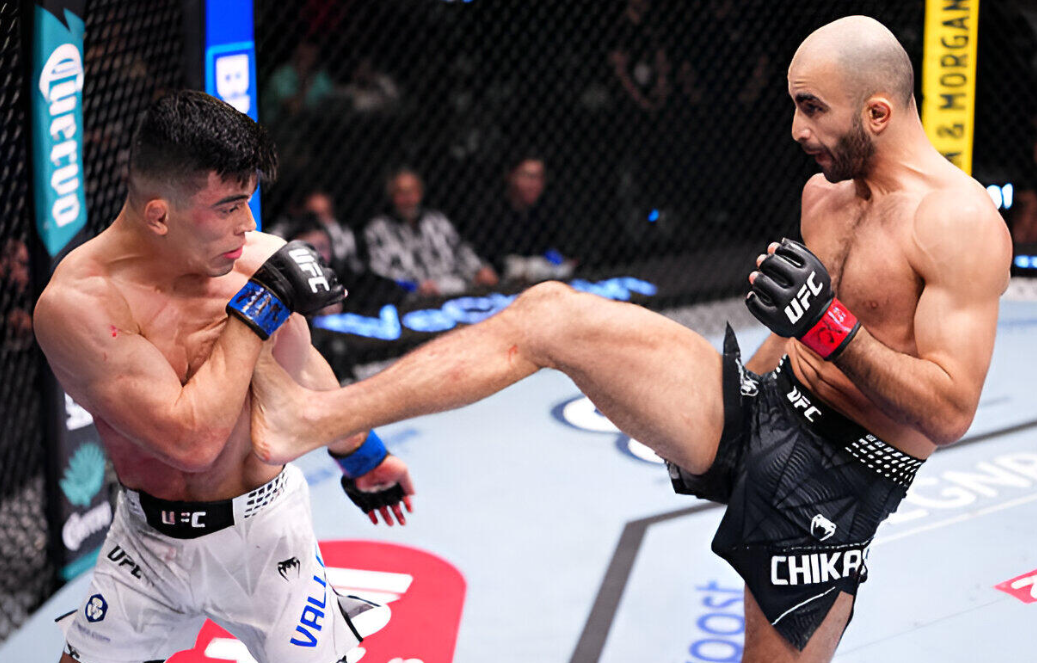
On December 14, at the UFC’s year-end event, Giga Chikadze faced Argentine fighter Kevin Vallejos in the main card and was defeated by knockout in the second round.
Despite the victory, Vallejos did not hold back in praising Chikadze, calling him a “legend.”
“Giga Chikadze is a legend. He had seven consecutive wins in the UFC. Beyond that, he’s a winner in life as well. He helps people battling cancer. I really want to donate a portion of my fight purse to his organization. He is someone I was honored to fight. Giga, tell me how I can contact your charity to make a contribution,” Vallejos said.
For reference, Chikadze’s MMA record stands at 15 wins and 6 losses, with three losses in his last four fights and defeats in the last two bouts.
Vallejos, 24, has won 17 out of 18 fights, losing only once.
In his latest UFC bout, Kevin Vallejos secured a decisive knockout victory, but it was his words after the fight that captured the attention of fans and analysts alike. Vallejos publicly honored his opponent, Giga Chikadze, describing him not just as a competitor but as a “legend” in the sport, emphasizing Chikadze’s accomplishments and his strategic excellence inside the octagon.
Chikadze, who has built a reputation for technical precision and consistent performance in the UFC, is widely recognized as a trailblazer for Georgian athletes in mixed martial arts. Vallejos’ acknowledgment highlights a rare aspect of combat sports: the balance between competition and respect. Despite the outcome of the fight, paying tribute to a respected opponent reflects a professional ethos that extends beyond personal victory.
From an analytical perspective, such recognition is significant on multiple levels. Firstly, it underlines Chikadze’s influence within the bantamweight division, where consistency, technical mastery, and adaptability define success. Secondly, it reinforces UFC culture, where sportsmanship, respect for opponents, and recognition of skill contribute to the legitimacy and integrity of the sport.
Sports analysts note that public acknowledgment from a competitor can have broader implications for a fighter’s career. Beyond emotional and symbolic value, it boosts a fighter’s reputation, strengthens their personal brand, and can influence future matchups and sponsorship opportunities. In this case, Vallejos’ praise positions Chikadze as a benchmark for technical excellence and professionalism in the division.
Moreover, such gestures contribute to the global visibility of fighters from regions like Georgia, demonstrating that high-level MMA talent is not confined to traditional powerhouses. By honoring Chikadze, Vallejos indirectly spotlights the achievements of Georgian athletes and the growing international presence of MMA talent from smaller markets.
In conclusion, Kevin Vallejos’ post-fight tribute to Giga Chikadze serves as a reminder that MMA is as much about respect, legacy, and professional integrity as it is about victories and statistics. While the knockout establishes Vallejos’ skill and strategic execution, his acknowledgment of Chikadze reinforces the shared values of the sport: recognizing talent, dedication, and the enduring impact of those who elevate the game.