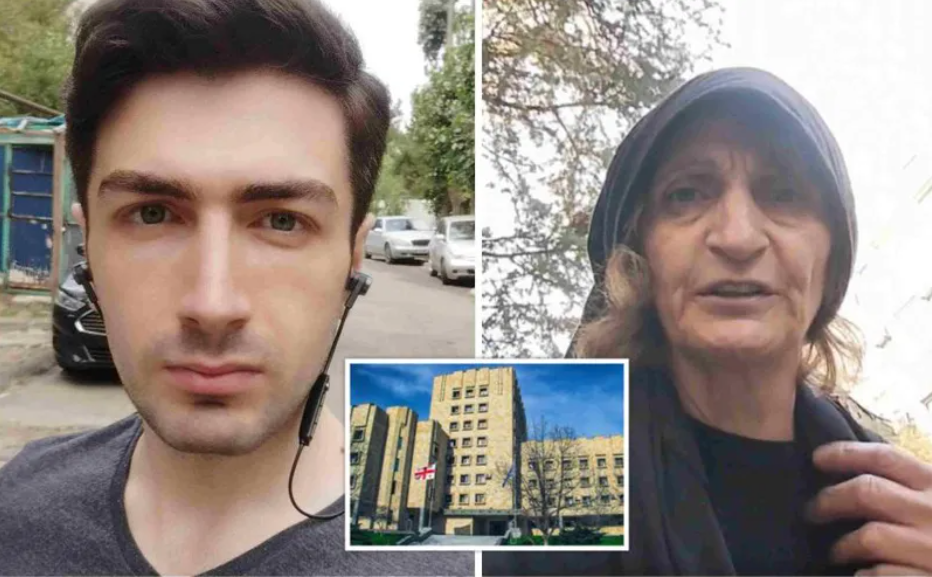
See what the Prosecutor’s Office of Georgia says regarding this matter
🔵 Statement by the Prosecutor’s Office of Georgia
“➡️ Due to the high level of public interest, we would like to provide the public with information regarding the developments surrounding the criminal case of Giga Avaliani.
➡️ Yesterday, on December 22, 2025, members of Giga Avaliani’s family were offered a meeting with the Tbilisi Prosecutor. Upon arrival at the Tbilisi Prosecutor’s Office, the family members were asked, in accordance with the internal regulations of the Prosecutor’s Office, to place their mobile phones in a designated storage locker. They refused, stating that they could not entrust their mobile phones to the Prosecutor’s Office and demanded to attend the meeting with their phones. As a rule, citizens are not allowed to enter the Prosecutor’s Office building with mobile phones. Nevertheless, following this, Giga Avaliani’s mother, Eka Kupatadze, was offered the opportunity to attend the meeting with her mobile phone, but the family declined the meeting.
➡️ Later, during a protest held near the General Prosecutor’s Office of Georgia, Giga Avaliani’s family members, together with their legal representatives, were offered a meeting with representatives of the Department for Supervision of Prosecutorial Activities. In this case, there were no restrictions on attending the meeting with communication devices, so that this would not become another reason for refusing the meeting. Despite this, the meeting did not take place due to the family’s decision.
➡️ We also clarify that the criminal case under the investigation of the Gldani-Nadzaladevi Main Division of the Tbilisi Police Department of the Ministry of Internal Affairs was reviewed by the family’s lawyer, Darejan Sulashvili, a total of seven times — on October 23, 25, and 28, 2025, as well as on November 11, 16, 17, and 19, 2025. Each time, this was confirmed by her signature. On November 7, 2025, the family’s lawyer requested copies of the case materials, which was denied by a prosecutor’s ruling due to the risk of disclosure of the case materials, in order to protect the interests of the investigation, as well as in consideration of the Juvenile Justice Code. This ruling was appealed to a superior prosecutor on November 19. Since the case had already been submitted to the court on November 18, the appellant was informed that even if the appeal were upheld, it would no longer be possible to transfer the case materials, as the case had already been forwarded to the court.
➡️ Subsequently, the family’s lawyer applied to the Tbilisi City Court, requesting the transfer of the case materials from the judge hearing the case on the merits. The court granted the request and, given that minors are involved in the criminal case, required the victim’s legal successor to sign a non-disclosure agreement regarding the case materials. To date, no response or feedback has been provided to the court. Once appropriate feedback is submitted to the court, a decision has already been made to transfer the case materials.
➡️ As is known to the public, four minors have been detained and charged in this criminal case under Article 117, Part 2 of the Criminal Code of Georgia (intentional infliction of grave bodily injury resulting in death) and Article 376, Part 1 (failure to report a crime by a person who is aware that a serious crime is being prepared or has been committed).
➡️ The Prosecutor’s Office of Georgia once again expresses its readiness to meet with the injured party at any time and to provide detailed explanations regarding each investigative action, the legal qualification assigned to the actions of the detained persons based on these actions, as well as, where evidence and legal grounds exist, to initiate criminal prosecution against other individuals.
➡️ We also clarify that, both in the interests of the injured party and due to the specific nature of investigating cases involving minors, the Prosecutor’s Office has refrained from discussing the factual circumstances of the case to date.”
said Georgian Prosecutor’s Office about Giga Avaliani’s case
The Prosecutor’s Office highlights repeated attempts to meet with Avaliani’s family, underscoring both procedural adherence and flexibility—most notably allowing the victim’s mother to attend meetings with a mobile phone, a deviation from standard regulations. The family, however, repeatedly declined these opportunities. This pattern suggests a deep mistrust between the parties, complicating not only communication but also the perceived legitimacy of investigative actions.
From a legal perspective, the case involves severe charges: four minors have been detained under Article 117, Part 2 (intentional infliction of grave bodily injury resulting in death) and Article 376, Part 1 (failure to report a serious crime). The involvement of minors introduces additional procedural safeguards, including controlled access to case materials and mandatory non-disclosure agreements, reflecting the Prosecutor’s dual responsibility to protect both the victims and the defendants’ rights under the Juvenile Justice Code.
The case underscores significant challenges in balancing transparency, public interest, and legal protections for minors. While the Prosecutor’s Office expresses readiness to provide detailed explanations and initiate further prosecution if warranted, public scrutiny remains high. Analysts note that cases of this nature often shape broader discussions about juvenile justice, accountability, and media access to sensitive information.
The repeated refusal of the family to engage in meetings, despite procedural accommodations, raises questions about the potential for delayed resolution and highlights the role of trust in high-profile legal proceedings. Moreover, the case’s progression—from police investigation to court submission—demonstrates the tension between procedural rules and public demand for immediate transparency.
Conclusion:
The Giga Avaliani case is poised at a critical juncture where legal process, public interest, and media attention intersect. While the Prosecutor’s Office has adhered to established procedures, the absence of cooperation from the family complicates resolution and may prolong public uncertainty. As the legal process moves forward, the case will likely continue to serve as a reference point for discussions on juvenile justice, procedural transparency, and public trust in the Georgian legal system.
In short, the case is more than an individual tragedy; it is a lens through which the challenges of justice, media scrutiny, and societal expectations converge. Observers and stakeholders alike will be closely monitoring both procedural developments and the eventual outcomes, which may set precedents for how similar cases are handled in Georgia.